Beyond the Quick Brown Fox: Sentences That Test Every Sound in English
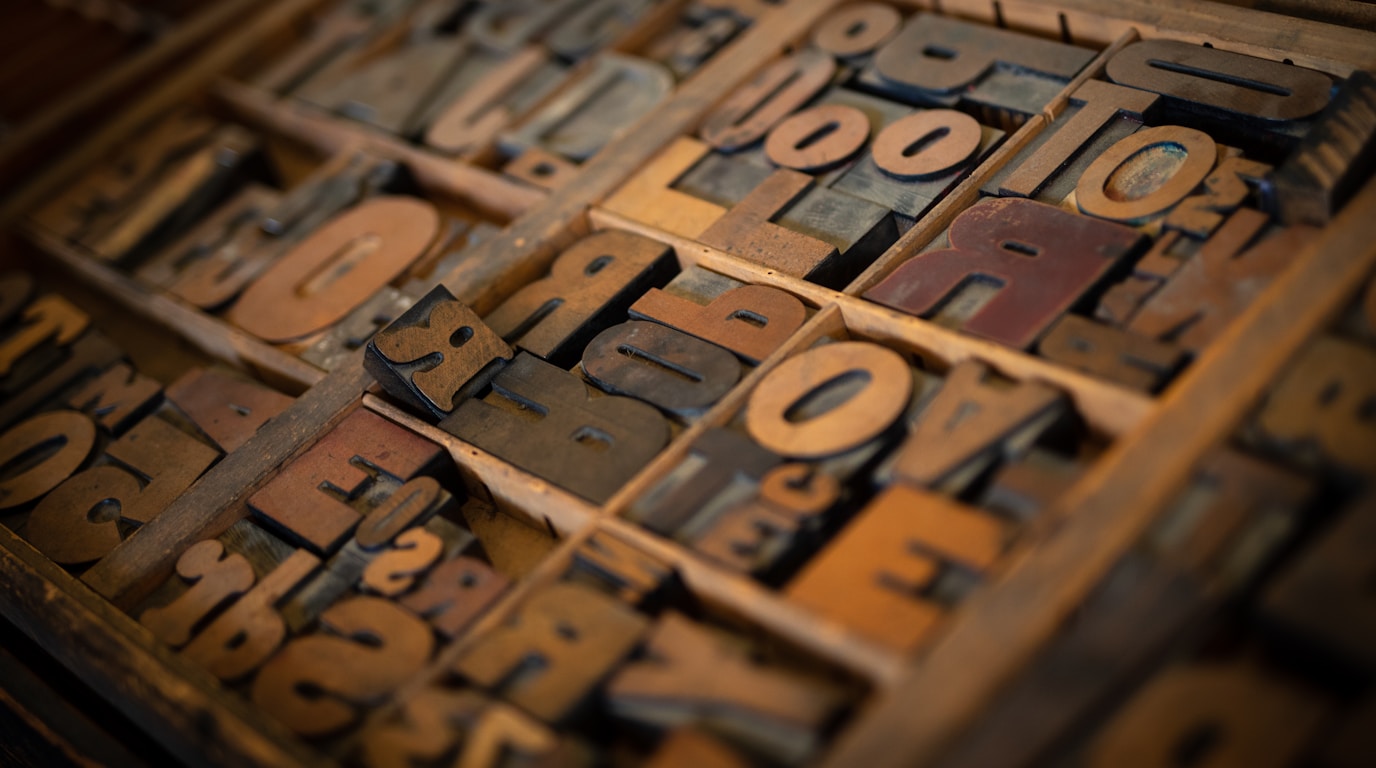
“The quick brown fox jumps over the lazy dog.” You’ve seen it a thousand times. It’s a pangram, a sentence containing every letter of the English alphabet at least once. Typographers love it, keyboard testers love it, it’s been around since at least 1885. It’s also, from a pronunciation standpoint, almost entirely useless.
English has 26 letters. It has roughly 39 phonemes, the distinct sounds that actually make up spoken American English. Letters and sounds have a famously troubled relationship in English, the letter “c” can sound like /k/ or /s/, the combination “th” represents two different sounds depending on whether you’re saying “think” or “the,” the letter “a” alone covers at least four vowel sounds. A sentence that checks every letter tells you almost nothing about whether someone can produce every sound.
What you actually want is a phoneme pangram. A passage that contains every sound in spoken English. Linguists have been quietly building these for decades, not as a parlor trick but as serious diagnostic instruments.
Why it’s harder than letters
Twenty-six letters fit into a single sentence without much trouble. Thirty-nine phonemes are another story entirely. You need all the obvious consonants, fine, but you also need every vowel, including the ones that most people don’t even realize are different sounds. The vowel in “ship” is not the vowel in “sheep.” (check out our ear test if you’re doubtful.) The vowel in “cat” is not the vowel in “car.” The vowel in “book” is not the vowel in “boot.” English has roughly fifteen vowels and diphthongs depending on your dialect and they all need to show up.
Then there are the awkward phonemes. The /ʒ/ sound, the one in the middle of “measure” or at the end of “beige,” is one of the rarest sounds in English, it barely appears in everyday vocabulary. The “ng” sound /ŋ/ only shows up at the ends of syllables. The voiced “th” /ð/ and voiceless “th” /θ/ need to be in there but tend to live in function words like “the” and “through” rather than content words that carry narrative weight.
And there’s a deeper challenge beyond mere coverage: phonetic balance. It’s not enough to include each phoneme once. You want phonemes represented roughly in proportion to how often they appear in natural speech, so the passage actually sounds like English rather than a lab exercise. It easy to produce a jumble of words or a non sensical sentence that includes all phonemes, but not something that flows and sounds naturally. You do not want to trip speakers up with the contents too much, when what you care about is the pronunciation.
“Shaw, those twelve beige hooks are joined if I patch a young, gooey mouth.” That’s a real attempt covering the phonemes. It also sounds like someone having a stroke.
The established passages
Linguists and speech pathologists have been refining phoneme passages for over sixty years. Here are the ones that actually matter.
The Stella Passage
“Please call Stella. Ask her to bring these things with her from the store: Six spoons of fresh snow peas, five thick slabs of blue cheese, and maybe a snack for her brother Bob. We also need a small plastic snake and a big toy frog for the kids. She can scoop these things into three red bags, and we will go meet her Wednesday at the train station.”
Developed for George Mason University’s Speech Accent Archive, this is probably the most widely used phoneme passage in the world. Over 2,800 speakers from more than 300 language backgrounds have been recorded reading it. The design goal was to elicit most American English consonants, vowels, and consonant clusters in something that sounds like an actual shopping list. The casualness is the point, it captures how you actually speak rather than how you speak when you’re trying hard.
It’s natural, conversational, about 20 seconds long, and has excellent consonant cluster coverage. But it’s light on /ʒ/ (the “measure” sound), missing /ɔɪ/ (as in “boy”) and /aʊ/ (as in “out”) entirely, and weak on the /dʒ/ affricate (as in “judge”). These aren’t obscure sounds, they’re phonemes that trip up learners from specific L1 backgrounds. The gaps matter.
The Rainbow Passage
“When the sunlight strikes raindrops in the air, they act as a prism and form a rainbow. The rainbow is a division of white light into many beautiful colors. These take the shape of a long round arch, with its path high above, and its two ends apparently beyond the horizon…”
From Grant Fairbanks’ Voice and Articulation Drillbook (1960), the classic in speech-language pathology. About 330 words, covers all American English phonemes while explaining how rainbows form. Public domain, used in clinical settings for over six decades. Has the best phonetic balance of any traditional passage and mountains of normative data behind it.
The problem is length, about 90 seconds for the full passage, and register. Nobody talks like a textbook about rainbows. The first four lines alone cover all phonemes, which tells you the other 280 words are mostly there for balance.
The Grandfather Passage
“You wished to know all about my grandfather. Well, he is nearly ninety-three years old. He dresses himself in an ancient black frock coat, usually minus several buttons; yet he still thinks as swiftly as ever…”
Another public domain classic, widely used for voice and fluency assessments. A brief portrait of an eccentric old man. Conversational, character-driven, rich in r-colored vowels. Feels like a story rather than a test.
But it doesn’t achieve full phonemic coverage, several phonemes are missing entirely. And the vocabulary is archaic, “frock coat” and “Banana Oil!” will trip up non-native speakers for reasons that have nothing to do with pronunciation. It was designed for voice quality assessment, not phonemic diagnosis.
The Caterpillar
“Do you like amusement parks? Well, I sure do. To amuse myself, I went twice last spring. My most memorable moment was riding on the Caterpillar, which is a gigantic roller coaster high above the ground…”
The newest of the established passages, published in 2013 by Patel et al. specifically to address the limitations of the older ones. Full phonemic coverage, good phonetic balance comparable to the Rainbow Passage, modern vocabulary, prosodic contrasts and words of increasing complexity. Simple syntax, low cognitive load. Feels natural in a way the Rainbow Passage doesn’t.
The catch: it was designed for clinical motor speech assessment, not accent or L1 interference diagnosis. At about 160 words it’s longer than ideal for a quick diagnostic. And the amusement park framing is very American, which may feel culturally alien to some learners.
Arthur the Rat
“Once upon a time there was a rat who couldn’t make up his mind…”
Used by the Dictionary of American Regional English starting in the 1960s, this is a proper short story about an indecisive rat who can’t commit to evacuating a collapsing barn with the other rats. Fieldworkers recorded speakers across the entire United States reading it to build a dialect map of how Americans actually talk across regions.
Complete phonemic coverage, engaging narrative with tension and a dark ending, rich enough to capture natural connected speech patterns. But at about 450 words, roughly two minutes of reading, it’s far too long for a quick diagnostic. And it was designed for dialectology, mapping how native speakers vary, not for diagnosing L1 interference.
The single-sentence pangrams
A few attempts exist at cramming all phonemes into one sentence:
- “The beige hue on the waters of the loch impressed all, including the French queen, before she heard that symphony again, just as young Arthur wanted.” (Ollie Sayeed)
- “With tenure, Suzie’d have all the more leisure for yachting, but her publications are no good.”
- “Are those shy Eurasian footwear, cowboy chaps, or jolly earthmoving headgear?”
Impressively compact. They also read like fever dreams. The vocabulary is forced, the syntax is strained, some include borrowed sounds (/x/ in “loch”) that aren’t standard American English phonemes. Nobody talks like this. As diagnostic tools they’re essentially useless because you can’t tell whether a speaker stumbled because of a genuine phoneme difficulty or because the sentence made no sense.
What a passage actually reveals
When a non-native speaker reads a well-designed phoneme passage aloud, the passage becomes a diagnostic X-ray of their pronunciation. Every phoneme in the language gets a chance to surface, and the ones that don’t come out right tell you something very specific about which native language is shaping that speaker’s mouth.
A Spanish speaker will likely compress the vowels in “ship” and “sheep” into one sound, because Spanish doesn’t distinguish them. A Japanese speaker may swap /r/ and /l/ in “red bags” and “Stella.” A German speaker will voice “the” correctly but may turn /w/ into /v/ somewhere in “we will.” A Mandarin speaker might drop the final consonants in “bags” and “snack” because Mandarin syllables almost never end in consonants.
One passage. Thirty seconds of speech. And you can pinpoint with reasonable accuracy which sounds need work and which language background is causing the interference. That’s not a party trick, that’s the foundation of targeted pronunciation practice.
But the passage has to be designed right. The Grandfather Passage misses phonemes entirely, which means a difficulty that should surface simply doesn’t get tested. The Rainbow Passage tests everything but takes 90 seconds and sounds like a textbook. The single-sentence pangrams are so unnatural you can’t separate genuine pronunciation difficulties from the weirdness of the sentence itself.
The ideal passage doesn’t exist yet
Every existing passage was built for a specific purpose, and none of those purposes was “quickly diagnose a non-native speaker’s phoneme-level difficulties in a way that feels natural and covers everything.”
The Stella Passage comes closest. Natural, short, backed by the largest comparative dataset in existence. But its phonemic gaps are real. If you’re a French speaker who struggles with /ʒ/ in English contexts, or a Korean speaker working on the /ɔɪ/ diphthong, the Stella Passage simply never asks you to produce those sounds. You could read it perfectly and still have significant blind spots.
What you’d want is the naturalness of the Stella Passage, the phonemic completeness of the Rainbow Passage, the brevity of a single-sentence pangram, and the narrative quality of Arthur the Rat. That combination doesn’t exist in the literature. So we’re building it.
The constraints fight each other. Every time you close a phonemic gap you risk making the passage sound forced. Every time you shorten the passage you lose phonetic balance. Every time you prioritize naturalness you find yourself reaching for the same common words that leave rare phonemes uncovered. “The boy usually enjoys going out to the garage” nails six missing phonemes from the Stella Passage, but you have to earn that sentence by placing it in a context where it doesn’t feel like it was jammed in to check a box.
The best pangram is the one that doesn’t feel like a pangram at all. That turns out to be a surprisingly difficult thing to build.
Why this matters for practice
The old approach to pronunciation is to drill individual sounds in isolation. Practice the “th” sound fifty times, then move on. But that’s like practicing piano scales without ever playing a song. You need to produce sounds in context, embedded in the flow of connected speech, surrounded by the transitions and reductions that make spoken English what it actually is. Often overlooked, apart from the mere phoneme, is the practice of transitions between common adjacent phonemes, the coarticulation that makes connected speech genuinely difficult. A phoneme in isolation is one thing. That same phoneme wedged between two other sounds at conversational speed is a completely different challenge.
A well-designed phoneme passage gives you all of that in a single reading. It’s a workout for your entire phonetic range. And when paired with feedback that can identify exactly which phonemes you’re producing incorrectly, it becomes something closer to a diagnostic scan followed by a treatment plan. Read the passage once. The system identifies your specific weak points. Then you practice those, not the sounds you already produce fine, not a random sequence of drills, just the gaps that actually matter for you.
That’s what we’re building at SpeechLoop, we start with the diagnostic scan, then we add the daily practice on the sounds that actually need work.
References
Speech Accent Archive. George Mason University. https://accent.gmu.edu
Fairbanks, G. (1960). Voice and Articulation Drillbook (2nd ed.). Harper & Row.
Patel, R., Connaghan, K., Franco, D., Edsall, E., Forgit, D., Olsen, L., & Russell, S. (2013). “The Caterpillar”: A novel reading passage for assessment of motor speech disorders. American Journal of Speech-Language Pathology, 22(1), 1–9.
Cassidy, F. G. (Ed.). (1985–2013). Dictionary of American Regional English. Harvard University Press.
Flipsen, P. (2006). Measuring the intelligibility of conversational speech in children. Clinical Linguistics & Phonetics, 20(4), 303–312.
Kuhl, P. K. (2004). Early language acquisition: Cracking the speech code. Nature Reviews Neuroscience, 5(11), 831–843.
Early access offer
AI-powered pronunciation practice
SpeechLoop gives you phoneme-level feedback on your pronunciation using AI and spaced repetition. Sign up now and get lifetime free access when we launch.
$50/yr $0 forever
You're in! Lifetime free access locked in.
We'll email you when SpeechLoop is ready to download.